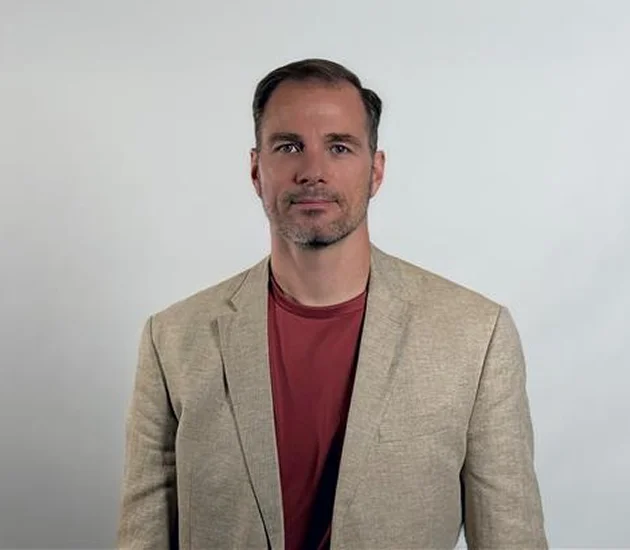
Todd Schrubb is a health system reformer redesigning how long-term human capability is supported, financed, and measured.
He founded FLOW to address a structural flaw in the modern health system: disease management is highly developed, yet capability preservation and longevity optimization remain financially misaligned and institutionally fragmented. As a result, expenditures compound without corresponding gains in sustained capability.
Rather than improving isolated components, Todd is building an integrated model that aligns proactive health strategy, actuarial risk management, and structured financial architecture within a unified institutional framework.
His reform approach is architectural — focused on incentive alignment, governance discipline, and long-term cost stabilization.
Todd brings nearly three decades of leadership experience across regulated healthcare and financial systems.
His experience spans Medicaid systems, payer platforms, enterprise architecture, risk governance, and institutional-scale delivery.
Health system reform requires structural rigor. Todd’s background is rooted in building systems that withstand regulatory, financial, and operational scrutiny.
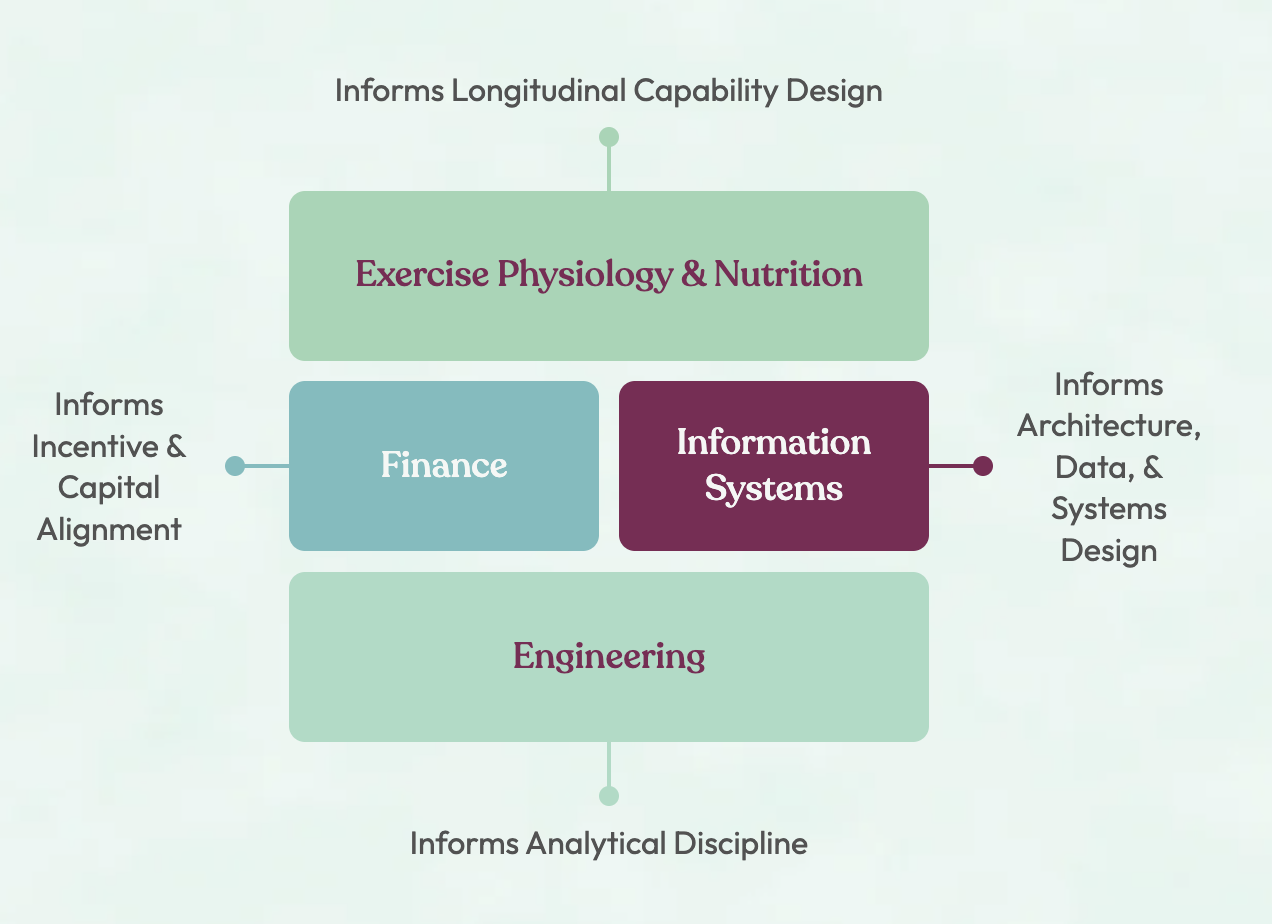
Todd’s training integrates engineering, finance, and health science:
Engineering informs system architecture and measurement discipline. Finance informs incentive alignment and capital modeling. Health science informs longitudinal capability design.
FLOW integrates these domains into a cohesive structural model.
Informs Longitudinal Capability Design
Informs Incentive & Capital Alignment
Informs Architecture, Data, & Systems Design
Informs Analytical Discipline
Todd operates under a simple principle: leadership owns outcomes. When teams succeed, credit belongs to them. When systems fail, responsibility rests with leadership.
He builds environments that balance rigor with stability — stretching capability while sustaining execution. Failure is treated diagnostically, not defensively.
This discipline underpins his approach to health system reform.
The modern health system is optimized for episodic intervention, not longitudinal capability stewardship.
Financial planning, insurance risk pooling, and health behavior operate independently despite shared long-term cost implications. The result is cost escalation driven by reactive intervention rather than sustained capability preservation.
Durable reform requires:
FLOW is being developed as infrastructure to realign these incentives — not by restricting care, but by making capability preservation economically coherent.
Reform at scale requires institutional collaboration. Todd engages with:
The objective is architectural evolution — not institutional antagonism.
Reform must be adoptable to endure.
Todd approaches health system reform as long-term infrastructure work. His career has centered on complex, regulated systems requiring disciplined execution and governance precision. FLOW extends that work into one of the system’s most persistent gaps: the absence of a coordinated, financially aligned model for sustained human capability.
The work is deliberate.
The sequencing is intentional.
The objective is end-to-end transformation of the health system.
Thank you! Your message has been sent.