Healthcare—and Its Language—Were Built for Disease, Not Healthspan
Modern healthcare is highly effective at what it evolved to do: identify disease, manage risk, intervene when pathology appears, and fund treatment once something goes wrong. Its systems—clinical workflows, reimbursement models, regulatory structures, and data standards—are oriented around discrete disease events: diagnoses, procedures, episodes of care, and claims. The language of healthcare reflects this reality. It is precise, operational, and fundamentally rooted in disease states.
What both the system and its terminology are not designed to do is manage health or healthspan as a long-term trajectory in the absence of disease. There is no equivalent vocabulary within healthcare for sustaining physical, cognitive, and metabolic capability over decades—only for documenting its decline. Healthspan, when referenced at all, is defined negatively: no diagnosis, no abnormal labs, no billable event. In other words, the system does not describe health; it describes the absence of illness.
The absence of disease does not mean good. It simply means not bad.
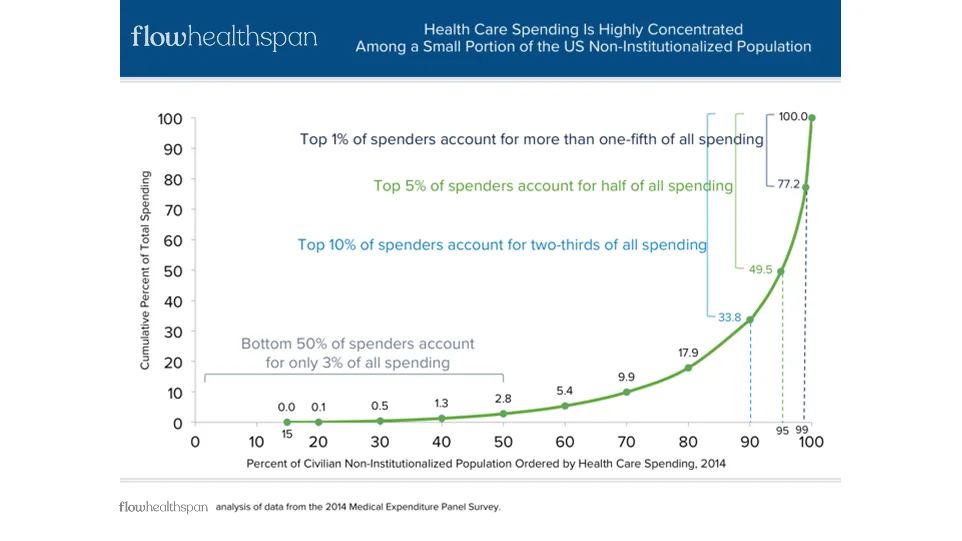
This distinction matters because systems follow language. When health is defined only through negative states—the presence or absence of disease—there is no conceptual space to describe positive states of function, resilience, or capacity. As a result, the system waits for conditions it can name. Interventions arrive late, triggered by thresholds crossed rather than trajectories observed. Care is episodic, not continuous. Success is measured in utilization, compliance, and short-term outcomes, not in preserved function or delayed decline.
The result is a growing mismatch. We increasingly expect healthcare to improve healthspan and extend years lived in good health, yet we rely on a system—and a vocabulary—built to manage illness. Lifespan extension and healthspan preservation become secondary effects rather than primary objectives, simply because there is no language to describe them as such.
This is not a failure of healthcare. It is a boundary condition. A system built to manage disease will naturally develop disease-centered language, incentives, and measurements. But as our goals shift toward sustaining healthspan across a lifetime, that language becomes insufficient—making it difficult to name, design, fund, and govern the work required to do so.
That gap in language is the first signal that a parallel system is missing.
Why Our Current Health Terminology Falls Short
If healthcare struggles to manage healthspan, part of the reason is linguistic. The words we use to describe health outside of disease are either too vague, too narrow, or too detached from systems, incentives, and accountability. We have terms for aspiration and outcomes—but not for the coordinated work required to achieve them.
“Wellness”
“Wellness” is the most common placeholder for non-disease health, and the least precise. It is broad, consumer-friendly, and culturally popular—but structurally weak. Wellness can describe almost anything, from mindfulness apps to supplements to corporate perks, without implying responsibility, measurement, or durability. It lacks a shared definition, a governance model, and a financial structure.
Wellness may improve individual behaviors, but it does not describe a system. It cannot coordinate long-term health decisions, manage tradeoffs over time, or align incentives around outcomes. As a result, it remains adjacent to healthcare rather than integrated with it—and insufficient as a foundation for managing healthspan at scale.
FLOW uses the term wellness to refer to the abstract goal of living a good life for as long as possible- it’s the cumulative result of taking the best care of yourself as possible, without any assumption of how that happens.
“Healthspan”
“Healthspan” is the most clinically grounded of the terms discussed here. It usefully distinguishes years lived in good health from years lived with disease or disability. But healthspan is an outcome, not a system. It describes what we want, not how we manage toward it.
Healthspan has no implied ownership, governance, or funding model. It does not indicate who is responsible for preserving it, how tradeoffs should be evaluated, or how resources should be allocated over time. As a result, it is referenced frequently—but rarely managed directly.
FLOW uses the term healthspan for it’s clinical grounding in years lived in good health, not just a lack of disease.
“Longevity”
“Longevity” is more ambitious, but also more ambiguous. It points toward extended life and improved aging, yet is often conflated with biohacking, extreme optimization, or lifespan obsession. Without structure, longevity becomes aspirational rather than operational—an idea rather than a system.
Longevity describes a goal, not the mechanisms required to reach it. It does not specify how behaviors, services, products, and financial decisions should be coordinated over decades, nor how success should be measured beyond survival. Without systemization, longevity remains motivating but incomplete.
We use the term longevity to mean both a person’s lifespan and healthspan. Lifespan incorporates the necessity of disease management and avoidance. As a result longevity is the most comprehensive term discussed so far.
“FLOW”- The Framework for Longevity and Optimized Wellness
FLOW is not a replacement for any of the terms above. It is a framework designed to organize them.
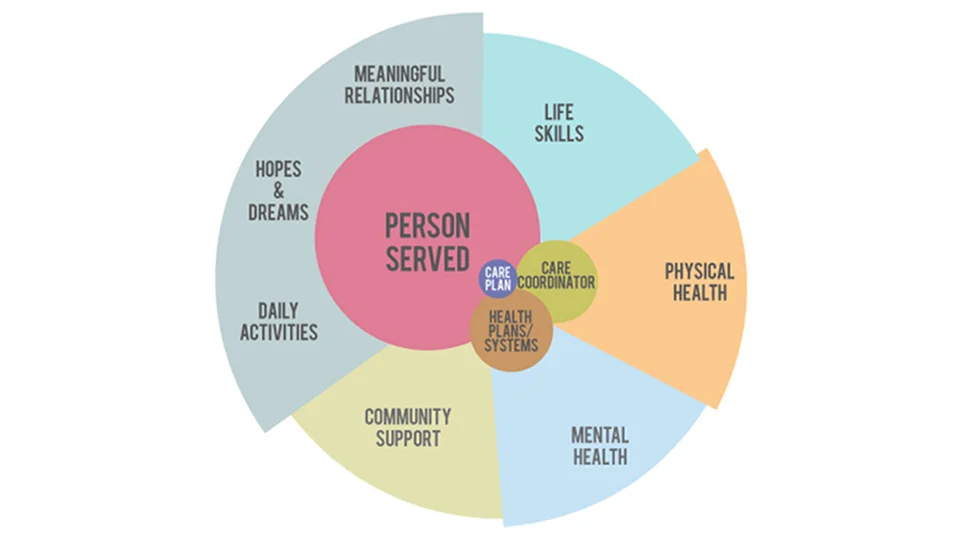
The Framework for Longevity and Optimized Wellness (FLOW) defines a structured, system-level approach to managing longevity across a lifetime. It explicitly separates what we are trying to achieve (wellness, healthspan, longevity) from how those outcomes are managed: through coordinated planning, services, financial mechanisms, and accountability over time.
FLOW exists because outcomes alone are not sufficient. Wellness describes an aspiration, healthspan describes a clinical result, and longevity describes a combined objective—but none of these terms specify how decisions should be made, how tradeoffs should be evaluated, or how resources should be allocated across decades. FLOW provides that missing structure.
Rather than conflating disease management and health creation, FLOW treats them as distinct but complementary responsibilities. It recognizes healthcare as essential for managing disease risk and pathology, while introducing a parallel system for managing healthspan and longevity intentionally—before disease appears and independent of medical necessity.
FLOW uses precise terminology deliberately. Words are chosen not for inspiration, but for function. The goal is not to redefine healthcare, but to make explicit the system required to manage what healthcare was never designed to manage on its own: sustained human health over a lifetime.
The Unnamed System
Each of the terms above captures something important. None of them, however, describe a coordinated system responsible for sustaining health over a lifetime. They describe aspirations, outcomes, or time horizons—but not ownership, governance, or structure.
That absence is not accidental. Our language evolved to support the dominant problem of the past: managing disease once it appears. As a result, we developed a system—and a vocabulary—optimized for illness, not for preserving healthspan or shaping long-term health trajectories.
As expectations shift toward prevention, optimization, and extended years lived in good health, that language becomes insufficient. Without a name for the system responsible for managing healthspan itself, it remains difficult to design, fund, and govern it deliberately.
That is the gap Longevity Care is meant to fill.
Introducing “Longevity Care”
Longevity Care, as a term, names the missing system responsible for managing healthspan and longevity intentionally across a lifetime. It is not a rebranding of healthcare, wellness, or prevention. It is a distinct, parallel system with its own purpose, scope, and operating logic.
Where healthcare is designed to manage disease—monitoring risk, diagnosing pathology, intervening when illness appears, and funding treatment—longevity care is designed to manage health before disease emerges. Its focus is sustaining physical, cognitive, and metabolic capability over time by coordinating behaviors, services, products, and financial decisions deliberately and continuously.
Longevity care is trajectory-based rather than event-based. It operates across decades, not episodes. Success is measured not by utilization or acute outcomes, but by preserved function, delayed decline, and extended years lived in good health. It treats health as something actively built and maintained, not merely defended once lost.
Importantly, longevity care does not replace healthcare, nor does it compete with it. The two systems serve different objectives and respond to different conditions. Healthcare remains essential for managing disease risk and pathology. Longevity care exists precisely because those responsibilities, while critical, are insufficient to manage healthspan on their own.
By naming longevity care explicitly, the work required to sustain health over a lifetime becomes visible, designable, and governable. What was previously implicit, fragmented, or relegated to “wellness” is elevated to a first-class system with clear accountability and intent.
Conventional usage within FLOW:
Longevity Care refers to the coordinated system of planning, services, incentives, and financial structures dedicated to preserving and extending healthspan and lifespan. Within FLOW, longevity care operates alongside healthcare as an equal, complementary system—focused on long-term health creation rather than disease response.
Healthcare and Longevity Care Are Equal—and Complementary
Healthcare and Longevity Care serve different purposes, but neither is subordinate to the other. They address distinct conditions, operate on different timelines, and optimize for different outcomes. Treating one as an extension or subset of the other obscures their roles and weakens both.
Healthcare is activated by disease risk and pathology. Its work begins when something is wrong—or likely to go wrong—and its success is measured by detection, intervention,
stabilization, and survival. Longevity care is activated by health itself. Its work begins before disease appears and continues regardless of medical necessity- it is the constant drive to improve and maintain vitality. Its success is measured by sustained function, delayed decline, and years lived in good health.
These differences are not philosophical; they are structural. Healthcare is event-based, episodic, and reactive by design. Longevity care is trajectory-based, continuous, and proactive by necessity. Healthcare manages risk and response. Longevity care manages capability and direction.
Financially, the distinction is just as important. Healthcare funding is optimized for utilization: visits, procedures, prescriptions, and claims. Longevity care requires a different logic—one oriented toward long-term investment, tradeoffs across decades, and outcomes that cannot be captured as the sum of encounters. Without separating these systems, healthspan initiatives are forced into frameworks never designed to support them.
Recognizing longevity care as a first-class system alongside healthcare does not diminish the importance of medicine. It clarifies it. Each system becomes more effective when it is allowed to focus on what it does best: healthcare on disease management, longevity care on health creation and preservation.
Together, they form two complementary halves of a more complete approach to human health—one that addresses illness when it occurs, and one that works continuously to delay its arrival.
The Unnamed Whole
If healthcare manages disease and longevity care manages healthspan, then an obvious question remains: what do we call the full system that governs human health across a lifetime?
Today, no widely accepted term exists—and that absence is telling. Our language evolved to address the dominant problem of the past: illness. As a result, we built systems, incentives, and vocabularies optimized for detecting disease, intervening when pathology appears, and funding care once something goes wrong. What we did not build was a comparable system—or language—for sustaining health over decades.
As capabilities shift toward prevention, optimization, and long-term health, the unnamed whole becomes increasingly visible. Without a name for the complete system that encompasses both healthcare and longevity care, responsibility remains fragmented. Healthspan initiatives struggle to find ownership. Long-term tradeoffs remain difficult to govern. And investment may continue to favor tactical tangible events over ethereal trajectories.
Longevity care is a necessary step toward closing that gap. It names the missing half of the system and makes healthspan a first-class responsibility rather than a side effect of not being sick. But it is not the endpoint. The work ahead is not only building new services or financing models—it is developing the language required to describe, design, and govern human health as a continuous process across a lifetime.
Only once we can name the whole can we fully align the systems meant to support it.